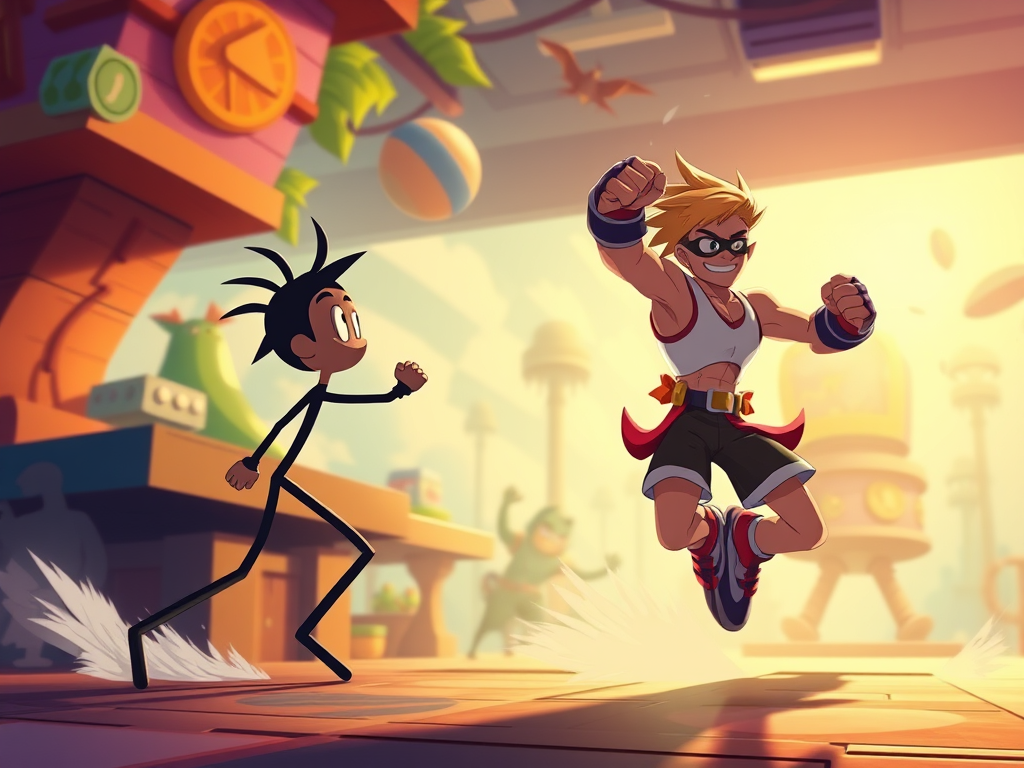
Building a 2D Animation Lab: From Stickman to Shared Worlds
An open-source journey inspired by MUGEN
How a Family Project Sparked a Bigger Vision
This adventure began as a rainy-weekend coding exercise with my daughter and nephews. Our goal was simple: turn a stickman doodle into a playable character. Their creativity quickly outgrew our prototype, pushing me to rethink how portable our characters could be across different games.
“Wouldn’t it be cool if our stickman could travel to any world we build next?” — My nine-year-old co-designer
Remembering MUGEN & the Power of Community Mods
Back in the early 2000s, the
M.U.G.E.N
engine gave budding game designers like me a playground to create custom fighters. It was
open, moddable, and wildly creative. That ethos still resonates, and it’s the spirit
I’m channeling into this 2D Animation Lab.
What Makes a Character Truly Portable?
Beyond sprite sheets, a portable character needs a rig—bones, constraints, and animation data that can be re-targeted. My lab focuses on:
- Skeleton-based animation for resolution independence.
- Procedural movesets that adapt to new physics systems.
- An open asset format anyone can extend.
Under the Hood: Tools & Techniques
I’m building with
TypeScript
,
HTML5 Canvas
, and a sprinkle of
WebGL
for performant previews. The engine is framework-free (think micro-ECS), so
contributors can drop in without wrestling heavyweight dependencies.
Join the Lab
If you’re passionate about open-source fighting games, procedural worlds, or just tinkering with animation rigs, check out the GitHub repo and share your ideas. The goal is to make the next-gen MUGEN together.
 Roaming Wild Gaming Blog
Leave a comment